Confidence · Practice · Enjoyment
When Overthinking Gets in the Way of Salsa
By Nina & Louis · 12 November 2026 · 5 min read
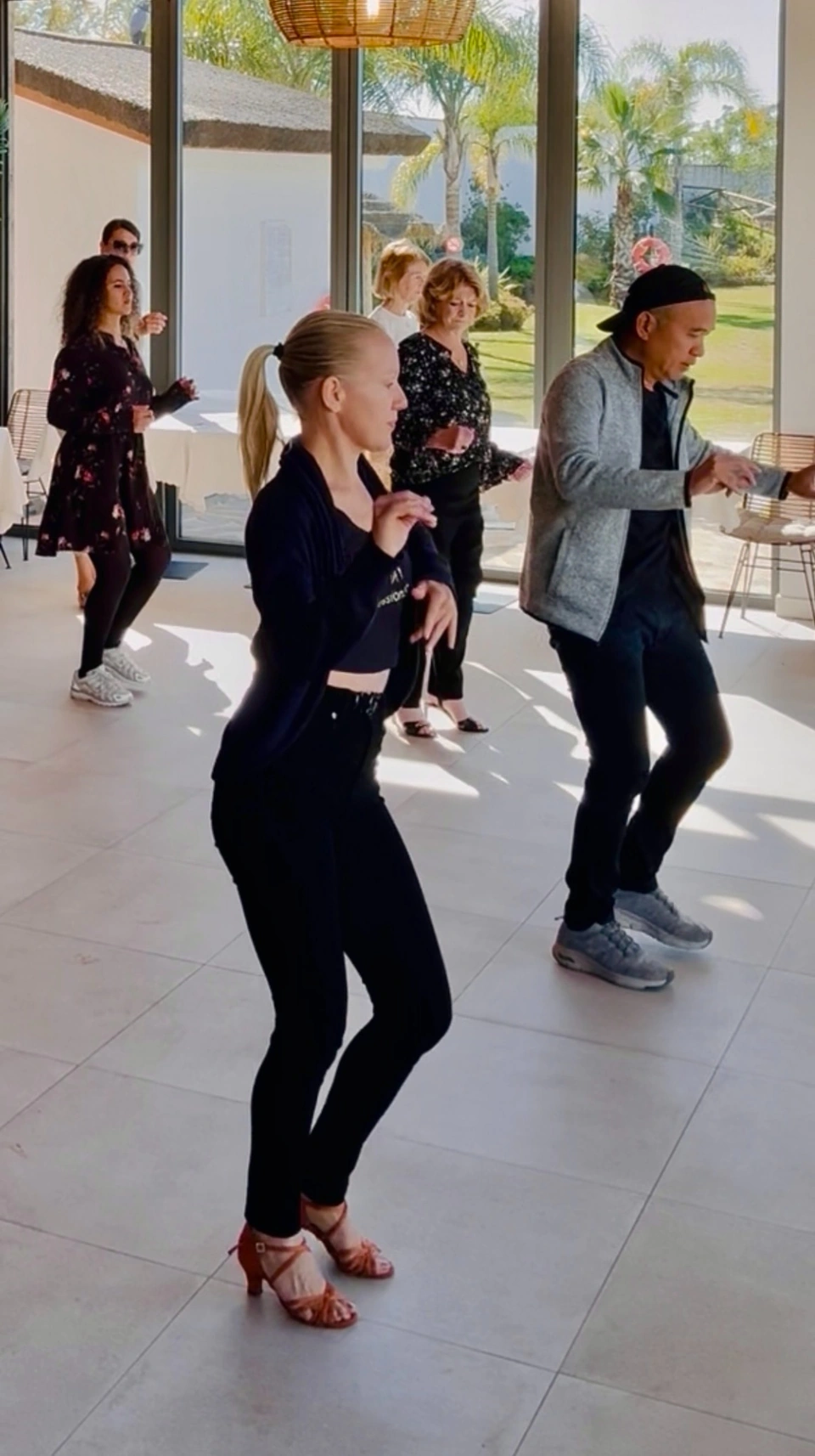
You know the step. You’ve practised it in class, and it felt comfortable a few minutes ago. Then you try it with a different partner, miss the timing and start questioning everything.
Before long, you’re thinking about your feet, your arms and what your partner might think of you. Meanwhile, the song carries on.
Most dancers will recognise some version of this. Learning Salsa takes concentration, but sometimes the effort to get everything right makes dancing feel harder than it needs to.
When thinking becomes overthinking
Thinking carefully about your technique is useful. It helps you understand a movement, correct a habit and make progress.
Overthinking feels different. You keep replaying a mistake, expect a turn to go wrong or worry about how you look instead of noticing what’s happening in the dance.
You might recognise a few of these habits:
- Feeling embarrassed after a missed step and wondering who noticed.
- Checking familiar timing so carefully that you lose your place.
- Tightening your hands or arms when a movement feels uncertain.
- Expecting difficulty because you struggled with the same step before.
- Finishing a song and realising you hardly listened to it.
These moments can be frustrating, especially when you know you’re capable of more.
Why familiar steps can suddenly feel difficult
In Salsa, you’re listening to the music, communicating with a partner and keeping track of the space around you. If you’re also judging every movement, there’s a lot competing for your attention.
You may hesitate before a turn you know well or keep thinking about a missed signal long after your partner has moved on. If you start to tense up, the connection can feel less comfortable, too.
Of course, a difficult dance isn’t always a matter of overthinking. You might need a clearer explanation, more practice or a slower song. A partner’s signals may be unfamiliar or uncomfortable.
It helps to work out what’s actually happening. Asking your teacher a specific question will usually be more useful than telling yourself you should be better by now.
Notice the moment you tense up
Try to identify when the difficulty starts. Is it just before a turn? When you change partners? When the music gets faster?
“I hold my breath before this turn” gives you something to work on. “I’m terrible at dancing” leaves you with nowhere to go.
Once you’ve noticed the habit, slow the movement down. Ask your teacher to watch and help you understand what needs adjusting.
You don’t have to solve it all yourself.
Build confidence gradually
Begin with a movement and pace you can manage comfortably. When that feels familiar, add a small challenge.
You could try the step with another partner, include it in a short sequence or practise to a slightly faster song. Give yourself time to adjust before adding anything else.
Pushing through pain, dizziness or uncomfortable contact won’t help. Pause when you need to, and speak up if something doesn’t feel right.
Give your attention somewhere useful to go
If you catch yourself criticising every step, choose one part of the dance to focus on.
Listen for the steady beat. Notice how your weight moves from one foot to the other. Pay attention to the contact in your partner’s hand.
Keep it to one thing for a while. You’ll have time to work on the other details later.
This can be particularly useful during a familiar basic step, when you have less to remember.
Practise one detail at a time
It’s tempting to repeat an entire combination until it works. But if the same part keeps going wrong, stop and look at that section.
Perhaps you’re starting the next movement too early. Perhaps you’re losing your balance or taking a step that’s too large.
Practise slowly enough to understand the adjustment, then put it back into the sequence. Take a break if you find yourself rushing or getting frustrated.
A few focused attempts can be more helpful than repeatedly going through the same difficulty without knowing what to change.
Let yourself look like a beginner
Learning involves awkward attempts. You’ll forget a sequence, misunderstand a signal and occasionally need to see something several times.
That can feel uncomfortable, particularly if you’re used to being good at the things you do.
Give yourself a fair chance to learn. Nobody walks into a first class with all the skills they’ll develop over the following months.
The same applies when an experienced dancer learns something new. Looking uncertain for a while is part of the process.
Check your breathing and tension
Concentration can come with habits you barely notice: holding your breath, lifting your shoulders or gripping your partner’s hand.
Between attempts, take a comfortable breath. Let your shoulders settle, soften your hands and check your balance.
You don’t need to fit your breathing into a particular count. Just notice whether you’re holding it when a movement becomes difficult.
Learn to recover
One missed step doesn’t have to spoil the rest of the song.
If you lose the timing, return to a basic step and listen for the rhythm. If you misunderstand a signal, give each other a moment to reconnect. If something feels uncomfortable, pause and say so.
You can discuss a recurring difficulty afterwards. During the dance, a simple restart is often enough.
Being able to recover comfortably is a useful skill in its own right.
Leave some room to enjoy the song
As the steps become more familiar, you’ll usually have more attention available for the music and your partner. You may notice that you’re looking down less or enjoying a turn that used to make you nervous.
Some evenings will still feel easier than others. Tiredness, unfamiliar music or a busy floor can make a difference.
You don’t need to wait until you feel completely confident to enjoy dancing. Use the steps you know, ask for help with the ones you’re learning and allow yourself the occasional mistake.
And when you catch yourself analysing everything, come back to the basic step for a moment. Listen to the song and give yourself a chance to enjoy it.